


In the rapidly evolving fields of semiconductor manufacturing, aerospace electronics, and medical device production, the demand for non-destructive cleaning methods has never been higher. Precision electronic components are highly sensitive to contaminants such as dust, flux residues, and oils, which can compromise performance and reliability. Traditional cleaning methods like water washing, chemical solvents, or mechanical abrasion often fall short due to risks of damage, environmental concerns, or inefficiency.
This article will explore the most effective non-destructive cleaning technology-dry ice cleaning technology-to help you practically solve your electronic component cleaning problems.
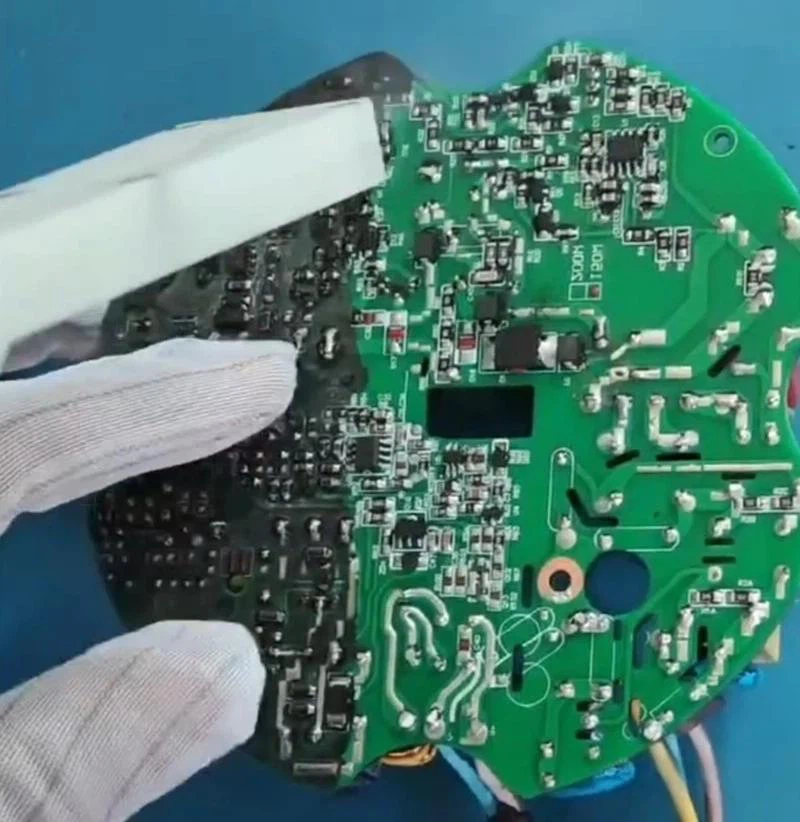
Common Contaminants on Precision Electronic Components
Contamination on electronic components is common and often unavoidable. It can come from manufacturing processes, operating environments, or routine maintenance activities.
Typical contaminants include:
- Flux residues from soldering and rework
- Oils and grease from handling or mechanical processes
- Dust and fine particles from industrial environments
- Residues from adhesives, coatings, or protective compounds
While some of these contaminants may appear harmless, they can cause serious problems over time. Ionic residues can attract moisture, leading to corrosion or electrical leakage. Dust and particles can interfere with signal transmission or heat dissipation. In high-reliability applications, even small amounts of residue can reduce performance or shorten service life.
Common Challenges in Cleaning Precision Electronic Components
Cleaning precision electronics is not as simple as "making them look clean." In fact, the cleaning process itself is often the biggest risk.
Several factors make precision electronic components difficult to clean safely:
Complex geometries: Modern components have tight gaps, low standoff heights, and densely packed layouts that are difficult to reach.
- Sensitivity to liquids: Many components cannot tolerate moisture penetration or trapped cleaning fluids.
- Risk of residues: Solvents and detergents may leave behind films or ionic contamination.
- Mechanical vulnerability: Excessive force, abrasion, or vibration can damage solder joints or microstructures.
- Inconsistent results: Manual or liquid-based cleaning methods often depend heavily on operator technique and process control.
As a result, a cleaning method that works well for general industrial parts may be completely unsuitable for precision electronics. In some cases, an aggressive or poorly controlled cleaning process can be more harmful than leaving light contamination in place.
The Best Cleaning Method for Precision Electronics: Dry Ice Cleaning Technology
Dry ice cleaning has emerged as one of the most effective non-destructive methods for cleaning precision electronic components, especially where traditional approaches fall short.
Instead of liquids, chemicals, or abrasive media, dry ice cleaning uses solid CO₂ particles. When these particles contact the surface, they remove contaminants through controlled physical effects and then instantly sublimate back into gas-leaving no residue behind.
For precision electronics, this approach offers several practical advantages:
- No water or liquid: Eliminates the risk of moisture penetration or drying-related failures.
- No chemical residues: Avoids corrosion, ionic contamination, and compatibility concerns.
- Non-abrasive and non-contact: Reduces the risk of mechanical damage to delicate components.
- Immediate dryness: Components are clean and dry as soon as the process is complete.
- Effective on complex assemblies: Contaminants can be removed from tight spaces and intricate structures without disassembly.
Rather than relying on aggressive chemistry or physical scrubbing, dry ice cleaning focuses energy on the contamination itself-not on the electronic component.

Dry Ice Cleaning Compared with Other Electronic Cleaning Methods
Different cleaning technologies are commonly used in electronics, each with its own limitations. When viewed from a risk and reliability perspective, the differences become clear.
|
Cleaning Method |
Typical Risks |
Suitability for Precision Electronics |
|
Solvent / Chemical Cleaning |
Residue, corrosion, operator exposure |
Limited, requires strict control |
|
Water-Based Cleaning |
Moisture retention, drying challenges |
Risky for sensitive components |
|
Ultrasonic Cleaning |
Vibration-induced damage, microcracks |
Not suitable for fragile assemblies |
|
Dry Ice Cleaning |
Minimal risk, no residue, no moisture |
Highly suitable |
While traditional methods can be effective in certain situations, they often require careful balancing of chemicals, time, temperature, and handling. Dry ice cleaning simplifies this equation by removing many of the variables that introduce risk.
Conclusion: Choosing the Best Cleaning Solution for Precision Electronics
For precision electronic components, cleaning is not just a maintenance task-it is a reliability decision. The wrong cleaning method can introduce hidden defects that only appear months or years later.
When long-term performance, safety, and consistency are priorities, non-destructive cleaning methods offer clear advantages. Among these, dry ice cleaning stands out for its ability to remove contamination without water, chemicals, abrasion, or residue.
As electronic components continue to shrink and reliability requirements continue to rise, cleaning solutions that minimize risk while delivering consistent results will play an increasingly important role. Dry ice cleaning is already proving to be a practical and effective answer for many precision electronic applications-and its adoption is only expected to grow.