


Dry ice blasting equipment has become one of the most efficient and environmentally friendly surface cleaning technologies across industries such as automotive manufacturing, mold maintenance, power generation, food processing, and rail transit.
The process accelerates dry ice pellets through compressed air, removing contaminants through a combination of thermal shock, kinetic energy, and sublimation, without creating any secondary waste.
But to achieve such precision and power, you need the right set of equipment. In this guide, we'll walk you through all the essential components required for dry ice blasting, their roles, and how YJCO2 helps you build a complete one-stop system.
Dry Ice Preparation and Storage Equipment
Dry Ice Pelletizer
The dry ice pelletizer converts liquid CO₂ at –78.5°C into solid dry ice pellets, typically 3 mm–19 mm in diameter.
Freshly made dry ice ensures maximum blasting performance since sublimation begins immediately after production. Depending on model size, output can range from 70 kg/h to 250 kg/h, ideal for both on-site and industrial-scale users.
CO₂ Dewar Tank
The CO₂ storage tank (also known as a Dewar flask) safely stores liquid CO₂ used for pellet production.
Typical capacities range from 10 m³ to 15 m³, matched with refilling trailers to minimize residual gas and ensure consistent supply for the pelletizer.
Ultra-Low Temperature Storage Cabinet / Insulated Box
After pelletization, dry ice must be kept at a very low temperature to prevent sublimation.
Insulated containers or ultra-low temperature cabinets are used for short-term storage and transport. These boxes are pressure-resistant and ventilated to maintain safe CO₂ concentration levels during storage.
Making dry ice on site greatly reduces transportation losses and guarantees consistent blasting quality.

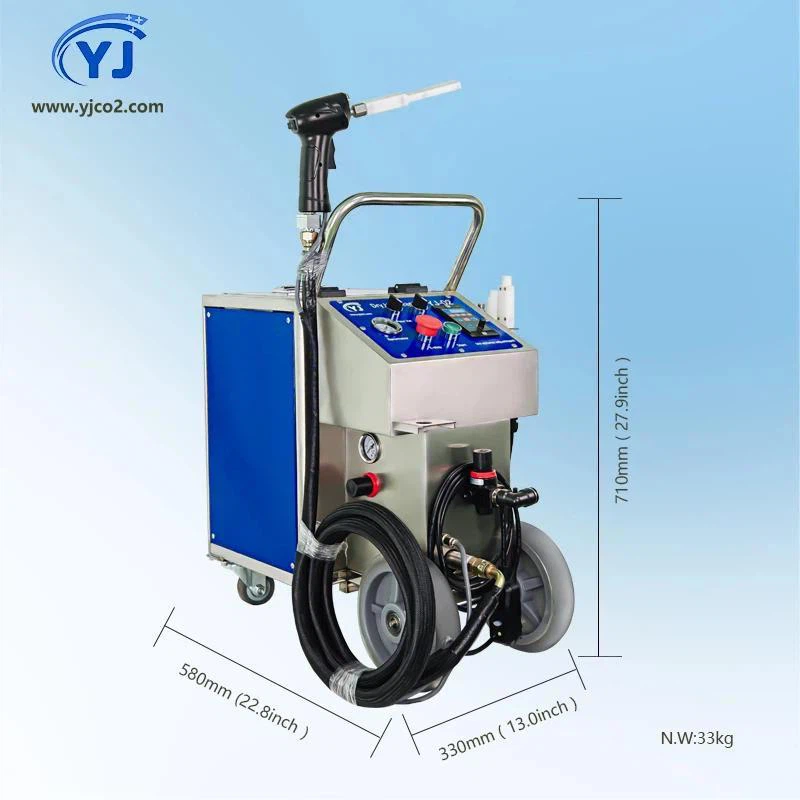
Dry Ice Blasting Machine (Main Cleaning Unit)
The dry ice blasting machine is the core equipment of the system. It integrates a dry ice hopper, feeding system, control unit, and compressed air interface.
- Main System: Built with precision feeding and automatic control for stable dry ice delivery. Some advanced models include PLC touchscreen operation, adjustable air pressure, and ice feed rate.
- Spray Guns and Nozzles: Different nozzle types allow for precise cleaning on various surfaces-fine jets for delicate parts, wide-angle nozzles for heavy deposits. Typical jet speed reaches 300–500 m/s.
- Hoses and Connectors: Flexible, low-temperature-resistant hoses ensure smooth material flow, usually 8 meters or longer, and designed to withstand up to 20 bar air pressure.
Together, these elements determine the cleaning efficiency, surface finish, and media consumption rate of your system.
Air Compressor and Purification System
Dry ice blasting relies heavily on the quality and stability of compressed air.
Air Compressor
A high-pressure, oil-free air compressor (typically ≥ 4 MPa) provides the driving force to accelerate dry ice pellets.
The airflow volume must match the nozzle and blasting machine capacity-too low and the cleaning power drops; too high and it wastes energy.
Air Dryer and Filtration Unit
To ensure clean and dry airflow, the system includes filters, oil-water separators, and air dryers. This prevents moisture or oil from freezing inside the hose or blocking the nozzle during operation.
Air Receiver Tank
Used to stabilize air pressure and reduce fluctuations in the supply line for consistent performance.

Supporting & Auxiliary Equipment
Mobile Racks and Transport Trolleys
For portable or multi-site operations, YJCO2 provides mobile racks that allow the entire setup to be moved easily within a workshop or factory floor. Some models can operate without external water or power, perfect for on-site cleaning.
Dry Ice Transport Boxes
When dry ice needs to be moved between production and cleaning sites, insulated transport boxes are essential to reduce sublimation loss and maintain pellet density (1.3–1.45 g/cm³).
Safety & Protective Equipment
Safety should always be a priority in dry ice cleaning operations.
- CO₂ Concentration Detector: In enclosed environments, CO₂ buildup can lead to oxygen deficiency. Detectors help monitor and alert operators in real time.
- Personal Protective Equipment (PPE): Operators must wear insulated gloves, safety goggles, and protective clothing to prevent frostbite from contact with dry ice.
- Ventilation Systems: Ensure proper air circulation to maintain a safe working atmosphere.
Complete One-Stop Solution by YJCO2
YJCO2 integrates China's most complete dry ice cleaning industry chain, offering a full system that covers every stage-from raw CO₂ to application equipment.
Our Integrated Supply Chain Includes:
- LCO₂ Dewar Flask – for storing liquid carbon dioxide
- Dry Ice Pelletizer – for on-site dry ice production
- Ultra-Low Temperature Cabinet – for dry ice preservation
- Air Compressor System – for high-pressure airflow
- Dry Ice Blasting Machine – for industrial-grade cleaning
Even if you cannot source dry ice or compressed air locally, YJCO2 delivers a "dry ice + equipment + system" turnkey solution, ensuring your project runs smoothly from day one.
With OEM/ODM support, training programs, and technical guidance, we eliminate every logistical and technical barrier for our global customers.
Setup Tips for Building an Efficient System
- Match the air compressor capacity (pressure × flow) with the blasting machine requirements.
- Choose dry ice pellet size (3–6 mm for general cleaning; 9–16 mm for heavy-duty surfaces).
- Keep all hoses short and clean for optimal pressure transfer.
- Maintain filters and dryers regularly to prevent moisture buildup.
- Store dry ice in ventilated, insulated containers and avoid long downtime before use.
Proper matching and maintenance not only enhance cleaning performance but also significantly reduce operating costs.
FAQ
Q1: Can I buy dry ice instead of making it myself?
Yes, but locally purchased dry ice often loses density due to sublimation during transport. Producing it on site ensures maximum cleaning efficiency and lower cost per hour.
Q2: What compressor size do I need?
For industrial cleaning, an air compressor capable of 4–8 m³/min at 0.6–1.0 MPa is recommended. Requirements vary depending on the nozzle type and application.
Q3: How much dry ice is consumed per hour?
Most systems consume 25–60 kg of dry ice per hour, depending on settings and surface conditions.
Q4: Is dry ice blasting safe for electronics or molds?
Yes. Since dry ice sublimates instantly into gas, there is no moisture, residue, or abrasive damage, making it suitable for precision molds and electrical components.
Q5: What's included in a complete YJCO2 dry ice blasting package?
A full set includes the blasting machine, hoses, nozzles, control gun, air connectors, and optional compressor and pelletizer system.
Q6: Does YJCO2 provide training or installation support?
Absolutely. We offer on-site setup guidance, operator training, and 24/7 technical support for global customers.
Conclusion
Dry ice blasting is a revolutionary cleaning method that delivers powerful, residue-free results for industries worldwide. To fully harness its potential, each component-from the pelletizer to the compressor-must be perfectly integrated into a cohesive system.
YJCO2 provides everything you need in one place - CO₂ supply, dry ice production, blasting machines, air compressors, and safety systems - ensuring seamless setup and reliable operation anywhere in the world.
Contact YJCO2 today to get your customized dry ice blasting solution and experience true industrial cleaning efficiency.
