Mold shows up in attics, crawl spaces, basements, and industrial settings. It damages structures, spreads spores, and creates health issues. Facility managers and restoration teams need methods that remove it completely without making things worse.
Traditional approaches rely on chemicals, scrubbing, sanding, or high-pressure water. These work in some cases but often leave residue, damage surfaces, introduce moisture, or take too long.
Dry ice blasting uses solid CO₂ pellets blasted at high speed with compressed air. It removes mold through kinetic impact, thermal shock, and sublimation-no chemicals, no water, no abrasion.
We manufacture dry ice blasting machines and pelletizers. We've seen this method outperform traditional options in real jobs, especially where surface integrity and downtime matter. Here's a clear breakdown.
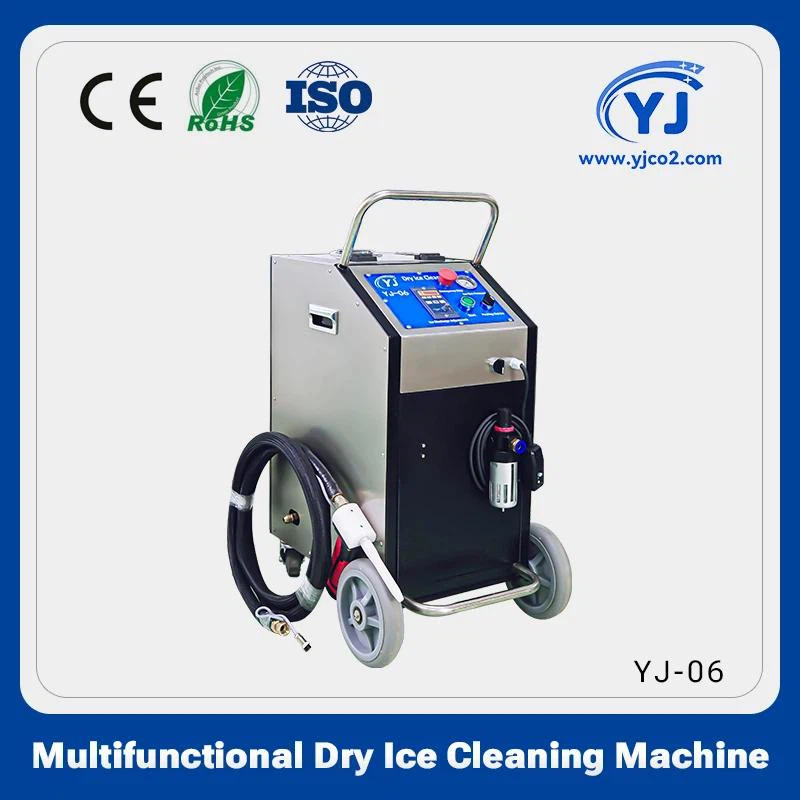
How Dry Ice Blasting Works for Mold Removal
Dry ice blasting combines three actions in one pass.
First, kinetic energy: pellets hit the surface at high velocity and knock off mold growth.
Second, thermal shock: dry ice at -78.5°C (-109°F) freezes the mold and any trapped moisture. The sudden cold makes spores and hyphae brittle.
Third, sublimation: pellets turn directly from solid to gas on contact. This creates micro-explosions that lift contaminants away. The CO₂ gas carries away debris and leaves nothing behind-no secondary waste.
The process reaches into cracks, pores, and seams where brushes or chemicals struggle. It kills spores on contact through the cold and removes root structures without harming wood, concrete, metal, or plastic.
This makes it ideal for precision work like injection molds or delicate building materials. No disassembly needed. No drying time.
The result: clean surface, reduced spore count, minimal disruption.
Traditional Mold Removal Methods and Their Drawbacks
Most teams still use one or more of these:
- Chemical biocides or solvents: Applied, left to sit, then rinsed. They kill visible mold but often leave residues. Fumes require evacuation. Repeated use can lead to resistant strains.
- Abrasive methods like sandblasting, wire brushing, or sanding: Strip mold but remove substrate material too. They create dust that spreads spores elsewhere. Not suitable for precision equipment or historic wood.
- High-pressure water washing: Flushes mold but soaks porous materials. Moisture gets trapped and encourages regrowth. Drying takes days, sometimes weeks.
These methods handle basic jobs. But in sensitive areas-food plants, hospitals, attics, or mold-contaminated machinery-they create extra problems: secondary contamination, extended downtime, added cleanup, and potential surface damage.
Head-to-Head Comparison: Dry Ice Blasting vs Traditional Methods
Here's how they stack up on key factors that matter in real projects.
|
Factor |
Dry Ice Blasting |
Traditional Methods (Chemicals / Abrasive / Water) |
Key Data / Notes |
|
Mold & Spore Removal |
99–99.9% (removes surface + embedded hyphae) |
Surface-level, often leaves roots/residual spores |
>99.9% spore kill in tested cases (industry reports) |
|
Speed |
60–80% faster; one pass, minutes to hours |
Multi-step, hours to days |
Attic projects: days reduced to hours |
|
Surface Impact |
Non-abrasive, no damage, no moisture |
Abrasion, corrosion, or water intrusion |
Safe on wood, metal, precision molds |
|
Secondary Waste |
Zero (sublimates completely) |
Dust, sludge, chemical runoff, spore spread |
No containment or disposal needed |
|
Environmental / Safety |
Non-toxic (food-grade CO₂), no VOCs |
Hazardous residues, fumes, health risks |
Meets strict regulations; no evacuation |
|
Downtime |
Minimal; in-situ cleaning, no drying |
Extended for drying, disassembly, cleanup |
Immediate re-use in most cases |
|
Long-Term Results |
Lower regrowth risk (no moisture/chemicals) |
Higher recurrence from residues or trapped water |
More durable remediation |
|
Cost (Long-Term) |
Higher upfront equipment; lower labor/consumables |
Lower initial; high ongoing labor/disposal |
ROI often <1 year with frequent use |
Dry ice blasting wins on efficiency and surface preservation. Traditional methods hold up for very deep, inaccessible growth or ultra-low-budget one-offs. But for most industrial and remediation jobs, the gaps in speed, safety, and results are clear.
Real-World Examples and Visual Results
In attic remediation, dry ice blasting often clears heavy mold in a fraction of the time. One documented attic project went from multi-day manual/chemical work to a single efficient pass, achieving near-complete spore removal without wetting insulation.
Crawl spaces and basements see similar gains. Mold on wooden beams and joists gets lifted without gouging the wood or spreading spores.
Industrial settings benefit too. Mold on equipment or HVAC components cleans in place-no shutdowns, no risk to sensitive parts.
Here are real before-and-after examples from mold remediation jobs using dry ice blasting:

Image source: sterimobile.com
These show typical results: dark, mold-covered wood turns clean and intact. No etching, no soaked areas.
Limitations and When to Choose Dry Ice Blasting
Dry ice blasting isn't perfect for everything.
It excels on surface and near-surface mold. Deep growth inside thick porous materials may need supplemental treatment.
It doesn't fix root causes like ongoing leaks or humidity-those must be addressed separately.
Upfront cost for equipment and dry ice supply is higher than basic tools. Small, one-time jobs might not justify it.
Safety basics apply: wear gloves to avoid frostbite, ensure ventilation for CO₂ displacement, use masks against dislodged spores.
It fits best when:
- Surface preservation matters (molds, historic structures, machinery)
- Downtime costs money
- Chemicals or water create risks
- Regulations demand low environmental impact
For those scenarios, it delivers consistent, measurable advantages.
Final Thoughts
Dry ice blasting removes mold more thoroughly, faster, and cleaner than traditional methods in most practical cases. It protects surfaces, cuts downtime, and avoids the secondary issues that turn small jobs into big headaches.
If mold keeps coming back or cleaning eats into production time, dry ice blasting changes the equation.
As a leading manufacturer of dry ice blasting machines and dry ice pelletizers in China, we build equipment that handles these jobs reliably. Our systems deliver consistent pellet quality and blasting performance.
Need to evaluate it for your next remediation or maintenance project? Reach out. We can share detailed specs, run a test demo, or connect you with similar case results. Let's discuss what works for your setup.