


Dry ice blasting is a cutting-edge, eco-friendly cleaning method that uses solid CO₂ pellets to remove contaminants without water, chemicals, or abrasive media. Widely adopted in industries like automotive, aerospace, and food processing, it requires specialized training to ensure safe, efficient, and high-quality results. As a leading manufacturer of dry ice blasting machines, YJCO2 provides comprehensive training to empower operators worldwide. In this article, we'll explore the essential training components for dry ice blasting, from safety protocols and equipment operation to practical techniques and regulatory compliance, to help you master this innovative technology.

Why Training Is Essential for Dry Ice Blasting
Dry ice blasting involves propelling frozen CO₂ pellets at high speeds (-78.5°C/-109.3°F) using compressed air (60-220 CFM at 60-100 psi), which poses risks like frostbite, CO₂ exposure, and noise hazards (up to 120 dB). Proper training ensures:
- Safety: Protects operators from CO₂ asphyxiation, freeze injuries, and noise exposure.
- Efficiency: Optimizes dry ice and air usage for cost-effective cleaning.
- Equipment Longevity: Reduces wear through proper operation and maintenance.
- Professional Results: Delivers consistent, high-quality cleaning for customer satisfaction.
Core Components of Dry Ice Blasting Training
Drawing from industry best practices and YJCO2's expertise, dry ice blasting training covers the following key areas:
1. Theoretical Knowledge
Understanding the science of dry ice blasting is critical for effective operation. Training includes:
- Cleaning Principles: Operators learn how dry ice pellets remove dirt through kinetic energy (high-speed impact), sublimation (rapid expansion from solid to gas, creating micro-explosions), and thermal shock (low temperatures causing contaminants to contract and crack). This residue-free process is ideal for sensitive surfaces.
- Parameter Optimization: Trainees master how to adjust pellet size (0.3-3 mm), spray pressure (0.3-15 bar), and spray angle based on material (e.g., delicate electronics vs. robust machinery) and contaminant type (e.g., grease, paint).
- Effect Evaluation: Operators are taught to assess cleaning outcomes by comparing surface cleanliness, equipment performance (e.g., speed, energy consumption), and environmental impact (e.g., noise, dust).
2. Equipment Operation
Mastering the dry ice blasting machine is essential for safe and efficient cleaning. YJCO2's training, included with every machine purchase, covers:
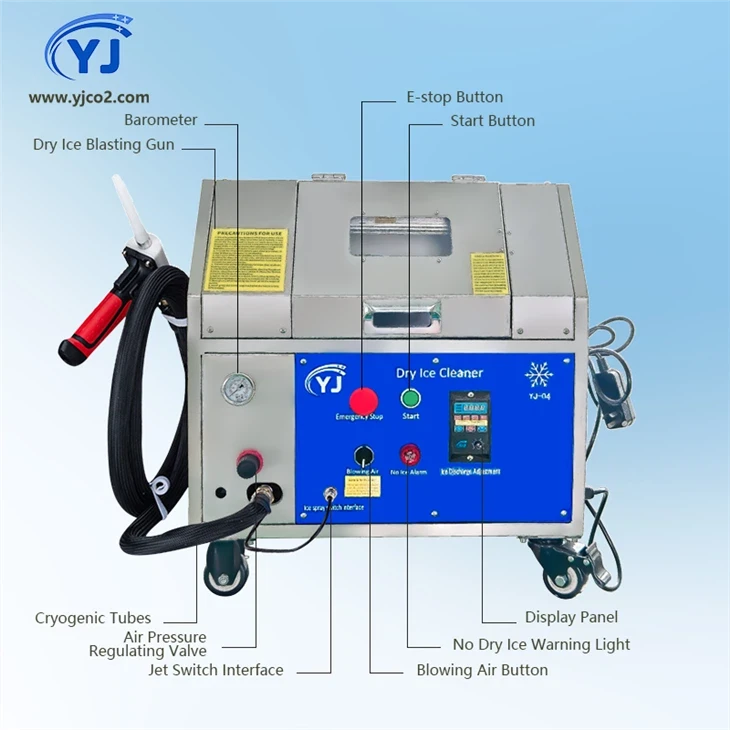
- Machine Components: Operators learn the function of key parts, including the pelletizer (converts liquid CO₂ to pellets), high-pressure nozzles (four included with YJCO2 machines), handheld spray gun, low-temperature delivery hose, and explosion-proof air hose.
- Setup and Startup: Trainees practice connecting the machine to a compressed air source, loading dry ice into the storage hopper (ensuring no clogs), and preheating the system to stabilize performance. YJCO2 provides remote or on-site installation guidance to ensure seamless setup.
- Operation Techniques: Operators learn to select single-hose systems for aggressive cleaning or dual-hose systems for delicate surfaces, adjusting pressure and flow rate for optimal results.
- Maintenance: Training includes routine checks (e.g., pneumatic oil, filters, hoses) and cleaning to prevent clogs from moist air, ensuring long-term reliability. YJCO2's 24/7 online support and spare parts supply enhance maintenance efficiency.
3. Safety Protocols
Dry ice blasting involves unique hazards, making safety training critical:
- CO₂ Safety: Operators learn to maintain ventilation to keep CO₂ levels below 5,000 ppm (OSHA limit) and use monitors to track CO₂ and oxygen levels, preventing asphyxiation in confined spaces.
- Freeze Protection: YJCO2 provides safety gear with every machine, including thermal gloves, safety goggles, and ear protectors, to prevent frostbite and noise-related injuries. Trainees learn to avoid direct contact with dry ice.
- Static and Fire Safety: Training covers anti-static measures to prevent sparks and fire safety protocols, as sublimated CO₂ releases oxygen, increasing fire risk near flames.
- Emergency Procedures: Operators are trained to handle CO₂ leaks, pressure spikes, or equipment malfunctions, with clear protocols for shutdown and evacuation.
4. Practical Techniques
- Spray Techniques: Operators practice adjusting spray angles (45-90°) and distances (10-30 cm) to optimize cleaning without damaging surfaces. For example, a shallow angle targets stubborn contaminants, while a wider angle suits delicate materials.
- Path Planning: Trainees learn systematic spray patterns (e.g., left-to-right, top-to-bottom) to ensure complete coverage, using YJCO2's professional spray gun for precision.
- Parameter Adjustment: Operators fine-tune pressure, flow rate, and pellet size based on real-time feedback, such as increasing pressure for thick grease or reducing it for electronics.
- Post-Cleaning: Training includes cleaning residual dry ice with tools like YJCO2's ice shovel, inspecting surfaces for damage, and maintaining a clean work environment.
5. Regulatory Compliance and Emergency Preparedness
Training ensures adherence to regulations and readiness for emergencies:
- OSHA and DOT Compliance: Operators learn to meet OSHA noise and CO₂ exposure limits and DOT rules for safe dry ice transport.
- Emergency Handling: YJCO2 trains operators to respond to issues like CO₂ leaks, fires, or mechanical failures, emphasizing team coordination with safety supervisors.
FAQs
1. How long does dry ice blasting training take?
Introductory courses last 1-2 days, with advanced programs extending based on complexity.
2. Is certification required for dry ice blasting?
Certification is optional but enhances credibility. YJCO2 offers exams for certification upon training completion.
3. What safety gear is needed?
YJCO2 provides thermal gloves, safety goggles, and ear protectors with every machine to prevent frostbite and noise injuries.
4. Is training included with YJCO2 equipment?
Yes, YJCO2 offers free training with every machine purchase, ensuring operators are fully equipped to start cleaning.
Conclusion
Dry ice blasting is a powerful, eco-friendly cleaning solution, but its success depends on proper training. YJCO2, a leader in dry ice blasting technology with over 3,000 global clients, offers comprehensive training covering safety, equipment operation, practical techniques, and compliance. Whether you're starting a cleaning business or enhancing in-house operations, YJCO2's training and state-of-the-art machines ensure safe, efficient, and professional results.
Want to learn more about dry ice cleaning machines? Please contact YJCO2 immediately via Email: info@yjco2.com to learn about our innovative dry ice blasting machines, tailor-made training and round-the-clock support.