Dry ice blasting technology has become an important option for industrial cleaning solutions. From aerospace tools to food production lines and repair projects, dry ice blasting can remove contaminants without causing wear or moisture, making it the gold standard for precise cleaning. However, dry ice blasting equipment is usually quite expensive, and for enterprises with infrequent usage, they may need to choose more cost-effective alternatives. Therefore, in this article, I will introduce several alternative solutions for dry ice cleaning technologies to help you make a better choice.
Why Is Dry Ice Blasting So Expensive?
While dry ice blasting is widely praised for its efficiency and zero secondary waste, many customers-especially small and medium-sized businesses-are quick to discover that the operating costs can be substantial. The financial burden is not just about the raw material; it's a combination of equipment investment, dry ice consumption, storage infrastructure, and ongoing operational demands.
Raw Material Cost: $0.50–$1.50 per Pound
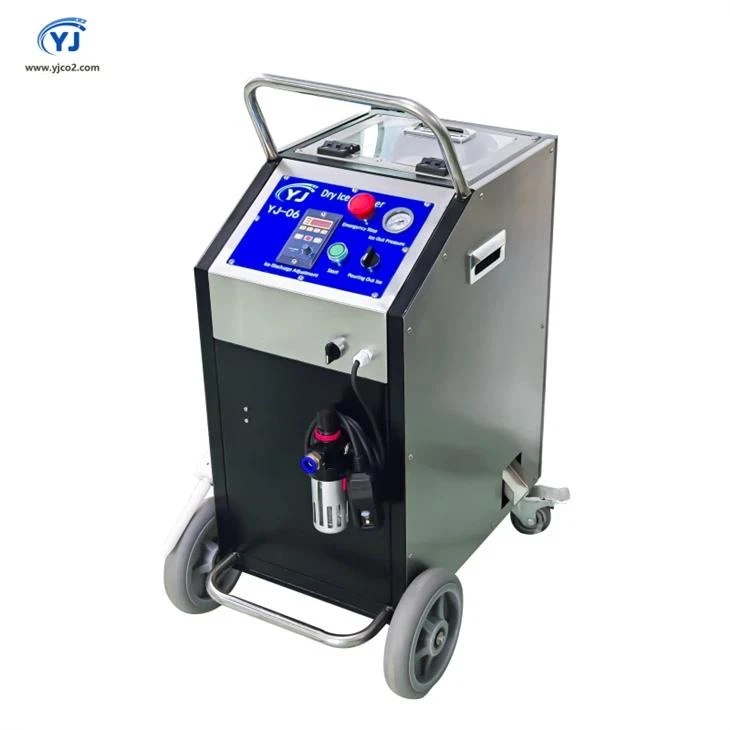
Dry ice pellets, the core consumable of the process, typically cost between $0.50 and $1.50 per pound. This might seem manageable at first glance, but usage rates compound the expense. For example, a YJ-06 dry ice blasting machine can consume up to 0.20 kg/min at standard power levels. A 10-minute cleaning job may cost around $2.00 per item just in dry ice media, without factoring in labor or equipment depreciation.
Equipment Cost: $20,000 and Above
Industrial-grade dry ice blasting systems, like the YJ series (YJ-04, YJ-06, YJ-11), are precision-engineered machines. Their price tags reflect the sophisticated design required to maintain stable media flow, safe operating pressures, and controlled blasting performance. Entry-level machines start at over $20,000, with more advanced models exceeding $30,000 depending on features like dual-hose feed, integrated moisture control, or variable pellet sizing.
Understanding the Cost Formula
The basic cost calculation for dry ice cleaning is straightforward:
Cleaning Cost = Dry Ice Consumption (kg/min) × Cleaning Time (min) × Dry Ice Unit Price ($/kg)
But in practice, this equation masks several hidden and often underestimated costs.
Hidden Costs You Shouldn't Ignore
- Cryogenic Storage Requirements
Dry ice sublimates at -78.5°C, meaning it requires specialized storage equipment to reduce loss during transit and handling. Cryogenic freezers or insulated storage containers can range from $13,000 to $30,000, depending on capacity and temperature stability.
- Loss Through Sublimation
Even with proper storage, dry ice constantly evaporates. In real-world scenarios, operators must account for up to 30% loss between delivery and usage, adding to ongoing supply costs.
- Safety and Training Overhead
Operators must be equipped with proper personal protective equipment (PPE), including thermal gloves, ear protection, and CO₂ monitoring devices. Ventilation must be ensured in enclosed spaces to prevent CO₂ buildup. These safety measures also require training, which adds to onboarding and compliance costs.
In short, dry ice blasting is effective and residue-free-but the high operating and setup costs mean it's not always the right fit for every use case. For cost-sensitive applications, alternatives may offer a better balance of performance and affordability.
What Are the Cheaper Alternatives to Dry Ice Blasting?
While dry ice offers undeniable advantages in precision and cleanliness, it is not the only solution. Depending on the type of contaminant, surface sensitivity, and budget constraints, other cleaning technologies may be more practical. Below are several viable alternatives:
1. Soda Blasting – A Budget-Friendly All-Rounder
- Soda blasting uses sodium bicarbonate (baking soda) accelerated through compressed air to remove surface contaminants.
- Use Case: Light contamination, paint stripping, fire damage, engine restoration
- Cost Advantage: Media costs range from $0.10–$0.30 per pound. Equipment starts under $10,000.
- Strengths: Non-abrasive, safe on aluminum and plastic, environmentally benign media
- Limitations: Generates secondary waste that must be cleaned up. Not suitable for high-precision industrial coatings.
2. Wet Ice Blasting – Nearly Zero Media Cost
This method utilizes frozen water particles, combining impact force with temperature variation to dislodge dirt and grime.
- Use Case: Historical artifacts, electronics, sensitive surfaces
- Cost Advantage: Water is practically free; however, freezing and delivery systems can cost upwards of $15,000.
- Strengths: Gentle on materials, minimal abrasion, no hazardous media
- Limitations: Residual moisture requires immediate drying. Incompatible with water-sensitive electronics and corrosion-prone metals.
3. Abrasive Blasting – Heavy-Duty Performance at Lower Cost
Sand, glass beads, or garnet are used as blasting media to strip away thick coatings, rust, and corrosion.
- Use Case: Shipyards, construction equipment, steel structures
- Cost Advantage: Media costs around $0.10–$0.20 per pound. Equipment ranges between $15,000 and $20,000.
- Strengths: Excellent for removing deeply embedded contaminants
- Limitations: Highly abrasive-may damage surfaces. Generates large amounts of dust and secondary waste.
4. Laser Cleaning – The Long-Term Investment
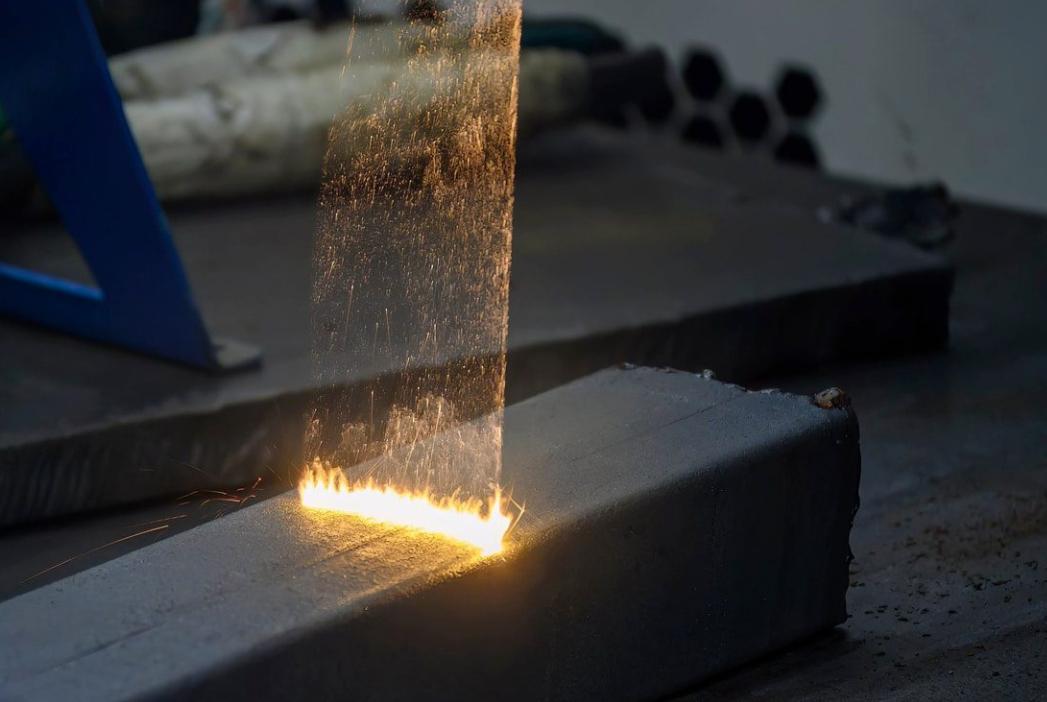
While not always considered "cheap" in terms of upfront cost, laser cleaning is gaining traction as a highly efficient and low-maintenance alternative.
- Use Case: Precision tooling, mold cleaning, rust removal, aerospace components
- Cost Advantage: Initial equipment cost is high, but zero consumables and low maintenance significantly reduce long-term operating costs.
- Strengths: No secondary waste, quiet operation, non-contact, highly programmable
- Limitations: Capital-intensive and may be overkill for basic cleaning tasks
Cost Comparison: Who's the Real Money Saver?
|
Method |
Media Cost (per lb) |
Equipment Cost |
Cleaning Efficiency |
Secondary Waste |
Ideal Applications |
Safety Level |
|
Dry Ice Blasting |
$0.50–$1.50 |
$20,000+ |
★★★★☆ |
None |
High-precision, sensitive equipment |
Moderate |
|
Soda Blasting |
$0.10–$0.30 |
<$10,000 |
★★★☆☆ |
Yes |
Automotive, light-duty industrial use |
Moderate |
|
Wet Ice Blasting |
Near zero |
$15,000+ |
★★☆☆☆ |
Minimal |
Museums, electronics |
High |
|
Abrasive Blasting |
$0.10–$0.20 |
$15,000–$20,000 |
★★★★☆ |
Yes |
Heavy-duty industrial cleaning |
Low |
This comparison shows that soda blasting and abrasive blasting are the most cost-effective in terms of media and equipment. However, wet ice and laser cleaning bring safety and environmental advantages that may justify their cost in specific industries.
Cleaning Method Recommendations by Use Case
Choosing the right cleaning technology isn't just about price-it's about matching the method to the surface, contamination level, and operational constraints. Here are some practical suggestions:
- Automotive Maintenance & Restoration
Soda blasting provides efficient paint removal without damaging surfaces. Many body shops have reported up to 60% savings in media cost after switching from dry ice.
- Food & Pharmaceutical Plants
Wet ice or dry ice remains preferred due to hygiene and safety compliance, although soda blasting may be acceptable for non-contact areas.
- Heavy Industry, Marine, or Steel Structures
Abrasive blasting handles scale, rust, and old coatings. Operators must weigh surface integrity risks against its aggressive cleaning power.
- Cultural Artifacts or Precision Electronics
Wet ice or laser cleaning are safest where material preservation is crucial. Laser offers unmatched precision and no moisture exposure.
- Startups or Budget-Conscious Facilities
For basic cleaning needs, soda or wet ice blasting strike a strong balance between upfront investment and ongoing affordability.

Conclusion
While dry ice blasting delivers excellent cleaning performance, its high operational and equipment costs may not be ideal for every business. Alternatives like soda blasting, wet ice blasting, abrasive blasting, and even laser cleaning can offer better cost-performance ratios in specific scenarios. The right choice depends on factors such as material sensitivity, contamination level, and budget. By evaluating your needs carefully, you can strike the right balance between cost and cleaning efficiency. If you are looking for cheap Small Dry Ice Blasting Machine, please contact us for a quote.