


In today's industrial cleaning landscape, dry ice blasting has emerged as a revolutionary technology. Across sectors such as manufacturing, food processing, electronics, and energy, traditional cleaning methods are increasingly challenged by low efficiency, chemical pollution, long downtime, and risks of surface damage. As industries move toward cleaner, safer, and more efficient production environments, dry ice cleaning machines are becoming a popular alternative.
This article provides a comprehensive explanation of how dry ice cleaning machines work, their advantages and limitations, cost and ROI considerations, and suitable use cases. Through data-backed analysis and international industry examples, we help you determine whether this technology is a smart investment for your business.
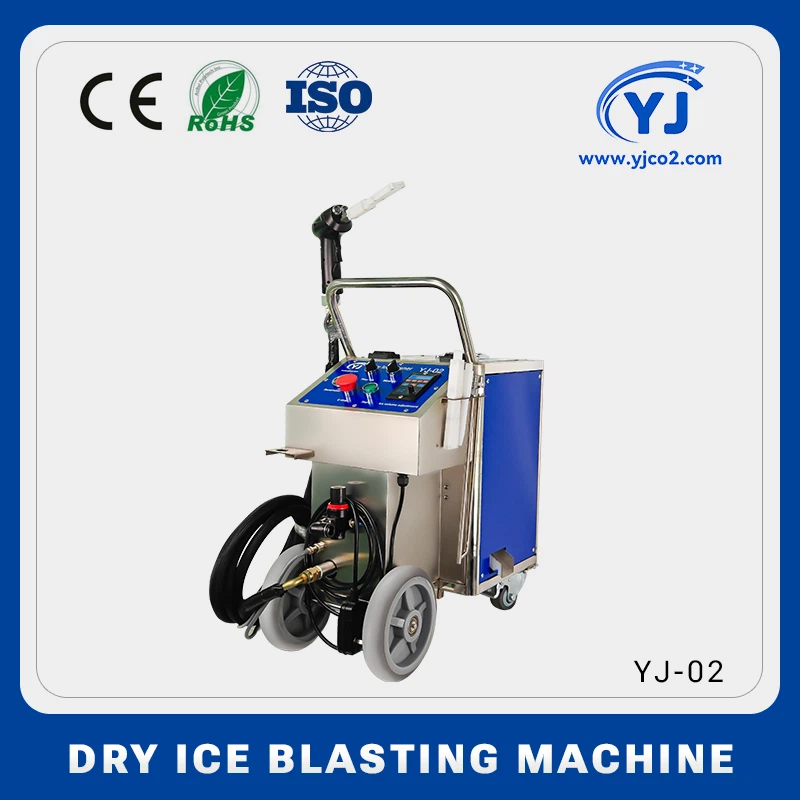
Is a Dry Ice Cleaning Machine Worth Buying?
With environmental regulations tightening worldwide and industrial cleanliness standards rising, dry ice blasting has attracted growing interest from companies seeking safer and more efficient cleaning solutions. Since a dry ice cleaning machine often costs several thousand to tens of thousands of dollars, many decision-makers naturally ask: Is a dry ice cleaning machine truly worth it?
There is no universal "yes" or "no."
The answer depends on your application, cleaning frequency, operational costs, and required cleaning performance.
Dry ice blasting has been adopted globally because it is eco-friendly, powerful, and non-abrasive. In many industries, it can increase cleaning efficiency dramatically and reduce the use of chemical cleaners by a wide margin. That said, dry ice blasting also comes with practical challenges-such as the cost of consumables and the need for reliable dry ice supply.
In the following sections, we will examine the technology from both technical and economic perspectives to help you make an informed investment decision.
What Is a Dry Ice Cleaning Machine?
A dry ice cleaning machine is a high-pressure blasting system that uses solid CO₂ pellets as the cleaning medium. Unlike water, chemicals, or abrasive media, dry ice cleaning relies purely on physical mechanisms.
A typical machine consists of:
- A dry ice hopper
- A blasting gun and hose
- A high-pressure airflow system (air compressor required)
- Control and safety systems
During operation, 1–3 mm dry ice pellets are accelerated to extremely high speeds and directed at the surface to remove contaminants.
The key to dry ice cleaning lies in its medium. Dry ice (solid CO₂ at –78.5°C) sublimates instantly upon impact, turning from solid to gas without leaving liquid or solid residue. This makes it ideal for moisture-sensitive environments such as electrical equipment, precision tools, and automation systems.
Dry ice blasters generally fall into two categories:
- Portable units for small-area or on-site cleaning tasks
- Industrial units for high-demand, continuous production environments
Different models vary in pellet consumption, pressure range, blasting velocity, and nozzle types-all of which directly influence cleaning effectiveness and cost.
Dry ice blasting is highly effective, but not universal. It works best for contaminants such as oils, carbon deposits, paint residues, release agents, and baked-on materials. It may be less ideal for extremely thick grease layers or specific chemical residues.
Understanding the machine's capabilities and limitations is essential before making a purchase.
How Does Dry Ice Cleaning Work?
The exceptional cleaning performance of dry ice blasting comes from the combination of three physical effects:
kinetic energy impact, thermal shock, and sublimation expansion.
1. Kinetic Impact
Compressed air accelerates dry ice pellets to high velocities. When these pellets strike the surface, they break and lift contaminants. Unlike abrasive blasting, dry ice pellets are soft and cause no wear on the underlying material.
2. Thermal Shock
At –78.5°C, dry ice creates a rapid temperature difference on contact. This causes contaminants to contract and crack, weakening their bond with the substrate. This effect is especially important when removing oils, waxes, polymers, and carbonized residues.
3. Sublimation Expansion
Upon impact, dry ice instantly sublimates and expands to nearly 800 times its original volume. This "micro-explosion" lifts contaminants from beneath, separating them from the surface-without leaving any secondary waste.
The cleaning result depends on:
- Pellet size
- Air pressure
- Blasting angle
- Distance
- Nozzle design
Operators typically adjust these parameters to achieve optimal results for each type of material and contaminant.

Advantages of Dry Ice Cleaning Machines
Dry ice cleaning has gained global popularity because it delivers substantial advantages over traditional cleaning methods.
1. Environmentally Friendly
Dry ice blasting uses no chemicals and no water, eliminating the need for hazardous waste disposal. Since dry ice sublimates into CO₂ gas, there is no wastewater, no residue, and no risk of chemical contamination. This helps businesses comply with environmental and hygiene regulations while lowering compliance costs.
2. Highly Efficient
Dry ice blasting can remove stubborn contaminants quickly, significantly shortening cleaning cycles. In many industrial applications, companies report a large reduction in downtime once switching from manual or chemical cleaning to dry ice blasting.
3. Non-Abrasive Cleaning
Dry ice pellets do not damage the underlying material. This is critical for:
- Precision molds
- Polished surfaces
- Electrical components
- Sensitive parts
The lack of abrasion extends equipment and mold life, reducing maintenance costs over time.
4. Safe and Operator-Friendly
Dry ice is non-conductive and safe for cleaning energized equipment (with proper safety precautions). It generates no additional vibration, moisture, or chemicals. Operators typically become proficient after short training periods, lowering labor requirements.
5. Wide Application Range
Dry ice blasting is used in:
- Injection molding
- Automotive manufacturing
- Food and beverage processing
- Aerospace maintenance
- Power generation
- Electronics and semiconductor industries
Its versatility allows companies to replace multiple cleaning methods with one solution.
Limitations of Dry Ice Cleaning Machines
Despite its advantages, dry ice cleaning has several limitations that may impact its suitability for certain users.
1. High Initial Investment
Dry ice blasting systems-especially industrial models-cost more than many traditional cleaning devices. Additionally, users often need compatible high-capacity air compressors. This upfront investment may be challenging for small businesses or low-frequency cleaning environments.
2. Ongoing Consumable Costs
Dry ice is a consumable product and must be replenished consistently. Since it sublimates over time, it cannot be stored long-term and usually requires just-in-time delivery. Depending on local supply conditions, consumable costs can become a significant portion of total operating expenses.
3. Storage and Logistics Challenges
Dry ice sublimates quickly, even in insulated containers. Users must coordinate cleaning schedules with dry ice deliveries and avoid delays that could lead to waste. Regions with limited dry ice suppliers may face higher logistics costs.
4. Technical Limitations
Dry ice blasting may not be ideal for:
- Very thick grease or heavy sticky residues
- Certain rubber-like contaminants
- Cleaning in highly humid environments
- Sensitive electronic components prone to static discharge
5. Safety Considerations
Although safe when used correctly, dry ice blasting requires:
- Protection against cold burns
- Hearing protection
- Adequate ventilation to prevent CO₂ accumulation
Proper training and PPE are essential.
6. Learning Curve and Parameter Control
Cleaning effectiveness depends heavily on operator technique. Users may need time to determine the optimal combination of pressure, angle, and pellet size for different materials.
Understanding these limitations helps businesses identify whether dry ice cleaning aligns with their needs and operational environment.

Operating Costs and ROI Analysis
Whether a dry ice cleaning machine is "worth it" ultimately depends on cost and ROI. A realistic evaluation must consider both direct expenses and indirect savings.
1. Initial Investment
A complete dry ice blasting setup typically includes:
- Dry ice blaster
- Nozzles and hoses
- Air compressor system
- Safety equipment
Industrial-grade systems generally fall within the low–mid five-figure price range (in USD/EUR equivalent), depending on performance level.
2. Variable Operating Costs
The major ongoing costs include:
- Dry ice consumption (Usage varies widely depending on task intensity, typically several to tens of kilograms per hour.)
- Electricity
- Maintenance (nozzles, seals, wear parts)
- Operator labor
In many regions, dry ice represents the largest portion of operating cost.
3. Potential Savings
Dry ice blasting can generate significant cost savings in:
a. Reduced use of chemicals
No chemical cleaners, solvents, or neutralizing agents are required.
b. Reduced wastewater treatment
No wastewater or chemical discharge simplifies compliance and lowers treatment costs.
c. Less downtime
Many companies report substantial reductions in production stoppage because dry ice cleaning can be performed in place without disassembly.
d. Lower equipment wear
Non-abrasive cleaning extends the service life of molds and high-value tools.

Comparison with Other Cleaning Methods
To evaluate whether dry ice cleaning is worthwhile, it is essential to compare it with other common industrial cleaning techniques.
1. Versus Chemical Cleaning
Dry ice cleaning eliminates:
- Chemical residues
- Worker chemical exposure
- Hazardous waste
- Compatibility risks in food, pharma, and electronics industries
Chemical cleaning may still outperform in removing specific chemical or polymerized residues.
2. Versus High-Pressure Water Blasting
Water blasting is effective but:
- Can cause surface erosion
- Requires drying time
- Produces wastewater
- Is unsuitable for electrical equipment
Dry ice solves all of these issues.
3. Versus Sandblasting / Abrasive Blasting
Abrasive blasting removes contaminants aggressively but:
- Damages substrates
- Generates secondary waste
- Cannot be used on precision surfaces
Dry ice blasting is non-abrasive and leaves no residue.
4. Versus Ultrasonic Cleaning
Ultrasonic cleaning is ideal for small, complex parts but:
- Requires disassembly
- Is limited by tank size
- Uses liquid mediums
Dry ice blasting excels at large, in-place cleaning tasks.
5. Versus Manual Cleaning
Dry ice cleaning is dramatically faster and more consistent, particularly for stubborn contaminants or large surfaces.
Global Industry Applications and Case Studies
Dry ice blasting is used worldwide across many industries. Below are representative international applications:
Aerospace
Dry ice blasting removes carbon deposits and oils from turbine components without damaging coatings. Maintenance time can be significantly reduced, and component life extended.
Automotive Manufacturing
Major automotive manufacturers use dry ice blasting for:
- Mold cleaning
- Weld slag removal
- Engine component maintenance
The method preserves dimensional accuracy and reduces cycle time.
Food Processing and Pharmaceuticals
Dry ice blasting is valued for its:
- Zero chemical residue
- Ability to clean production equipment without disassembly
- Compatibility with hygiene standards
It also supports cold sterilization in certain environments.
Electronics and Semiconductors
Dry ice micro-particle blasting removes flux, residues, and fine contaminants without static discharge or abrasion, improving yield rates and reducing rework.
Energy and Heavy Industry
Power plants, petrochemical facilities, and refineries use dry ice blasting for:
- Turbine cleaning
- Heat exchanger maintenance
- Online cleaning of large equipment
By avoiding disassembly, downtime can be reduced dramatically.
These international cases demonstrate the versatility and significant economic value of dry ice blasting across industrial sectors.
Who Should Consider Buying a Dry Ice Cleaning Machine?
Dry ice blasting is most beneficial for businesses with:
1. High cleaning frequency
Facilities needing frequent mold or equipment cleaning (weekly or more) often achieve the fastest ROI.
2. High-value or precision equipment
Non-abrasive cleaning protects expensive assets.
3. Strict hygiene or environmental requirements
Applicable to food, beverage, pharmaceutical, and clean manufacturing environments.
4. Operations where downtime is extremely costly
Industries with continuous production lines benefit most from dry ice's in-place cleaning capabilities.
5. High-risk cleaning environments
Dry ice reduces the need for workers to enter confined spaces, handle chemicals, or clean live electrical equipment.
6. High value-added products
Where surface quality or cleanliness directly affects product pricing or acceptance.
Businesses with low-frequency cleaning needs, on the other hand, may benefit more from outsourcing dry ice cleaning services rather than purchasing equipment.
Final Verdict: Is It Worth Buying a Dry Ice Cleaning Machine?
From technological, economic, and strategic perspectives, dry ice cleaning machines provide exceptional value for the right users.
Technical Performance
Dry ice blasting solves many pain points of traditional cleaning:
- It is efficient
- Non-abrasive
- Residue-free
- Safe for sensitive equipment
It performs exceptionally well in mold cleaning, electronics, aerospace components, and large industrial machinery.
Economic Value
In high-frequency cleaning environments, payback periods of 1–2 years are common due to:
- Reduced downtime
- Lower chemical and wastewater costs
- Longer equipment life
- Improved production efficiency
For low-frequency users, the economics may be less favorable.
Strategic Value
In industries where cleanliness affects product quality, safety, or regulatory compliance, dry ice cleaning can be a competitive advantage-even a necessity.
Recommendation Summary
- Highly Recommended: Frequent cleaning, high-value equipment, strict hygiene or environmental standards
- Recommended: Medium-frequency cleaning or in-place cleaning needs
- Evaluate Carefully: Low-frequency cleaning or limited budget
Dry ice blasting can truly transform maintenance operations for many businesses, but the decision should be based on a thorough evaluation of needs and costs.
FAQ
Q1: Is dry ice cleaning safe for electronic circuit boards?
Yes-dry ice cleaning is non-conductive and residue-free. It is widely used for cleaning automation modules, PCBs, and control components. However, systems designed for ESD-sensitive environments are recommended.
Q2: Does dry ice cleaning require post-treatment?
No additional cleaning is needed in most cases. Since dry ice sublimates instantly, surfaces can be used immediately afterward. Certain industries may still require sterilization depending on local hygiene requirements.
Q3: How long can dry ice be stored?
Dry ice sublimates continuously. Even in insulated containers, it is typically best used within 24–72 hours. Long-term storage is not practical, so users often rely on regular deliveries or on-site dry ice production systems.
Q4: Can dry ice blasting replace chemical cleaning entirely?
In most industrial applications, yes. For a small number of highly specialized residues, chemical methods may still be required as a supplementary step.
Q5: What is the typical payback period?
High-frequency users often achieve ROI within 1–2 years. Medium-frequency use may take longer. Low-frequency use may not justify purchasing the machine.
Q6: What safety concerns should operators be aware of?
Key considerations include cold burns, noise, and CO₂ concentration in enclosed spaces. With proper PPE and ventilation, dry ice blasting is very safe.
Q7: How can cleaning results be verified?
Common evaluation methods include:
Surface roughness measurement
Visual and microscopic inspection
Hygiene tests (ATP, microbiological swabs)
Q8: Does dry ice blasting affect the substrate temperature?
Temperature impact on the substrate is minimal, typically only a few degrees, due to the brief contact time of dry ice.