Most people interact with ice every day-whether it's keeping a drink cold or preserving food in a cooler. But while water-based ice is familiar and simple, there's another type of ice that behaves in an entirely different way: dry ice.
At first glance, both appear solid, cold, and useful for cooling. However, their composition, physical behavior, and practical applications couldn't be more different. These differences become particularly important when you need more than a basic cooling solution-such as in shipping, scientific storage, or industrial cleaning. In this article, we'll explore the key distinctions between dry ice and regular ice
What Is Regular Ice?

Regular ice-also known as wet ice-is simply frozen water. You make it at home, use it in drinks, and throw it in a cooler for short-term chilling. It melts at 0°C (32°F), and when it does, it leaves behind liquid water. While this is perfectly fine for casual use, such as cooling beverages or creating ice packs for injuries, it has limitations.
The biggest constraint with wet ice is its rapid melting and water residue. For many professional scenarios, this excess moisture isn't just inconvenient-it can be damaging or unsafe.
So, how does dry ice differ? The answer begins with its very composition.
What Is Dry Ice?
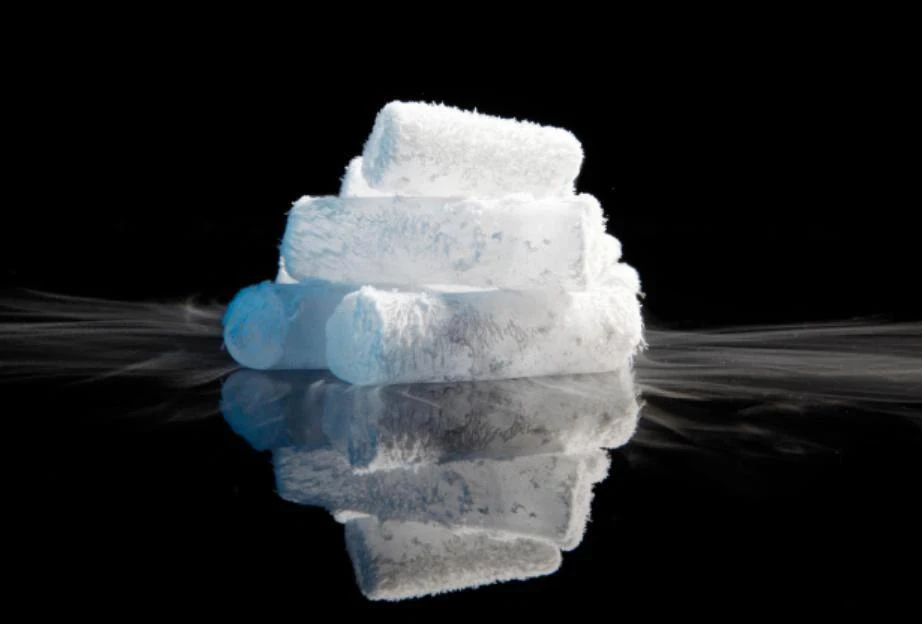
Unlike regular ice, dry ice isn't made from water. It's the solid form of carbon dioxide gas (CO₂)-a compound we normally associate with breathing and combustion. To form dry ice, CO₂ is pressurized and cooled to -78.5°C (-109.3°F), the point at which it becomes a solid.
But what's most fascinating is what happens when dry ice warms up. Instead of melting like regular ice, it undergoes sublimation-a phase change where it skips the liquid stage entirely and turns directly into gas. In other words, it doesn't melt, which means no water, no puddles, and no mess.
This unique behavior makes dry ice ideal for any environment where moisture is undesirable or unacceptable, such as electronics cooling, lab environments, or frozen goods transport. It also creates a dramatic fog effect, widely used in performances and special effects.
Physically, dry ice appears as white, solid blocks or pellets, often shrouded in a ghostly vapor when exposed to air. Its extreme cold temperature is both a feature and a risk-handling dry ice without proper protection can cause severe frostbite. That's why it must always be managed with thick gloves or tongs.
Another crucial point is storage. Because sublimation produces carbon dioxide gas, dry ice must always be stored in ventilated areas. Sealing it in an airtight container can lead to dangerous pressure buildup and even explosions. Proper ventilation is essential-not just for safety, but to maintain controlled, predictable sublimation rates.
Learn more about "What is Dry Ice"
Dry Ice vs Normal Ice: A Quick Comparison
To better understand the practical implications of these differences, here's a direct comparison:
|
Aspect |
Normal Ice (Wet Ice) |
Dry Ice |
|
Composition |
Frozen water (H₂O) |
Solid carbon dioxide (CO₂) |
|
Melting Behavior |
Melts into water (ice melts) |
Sublimates into gas (doesn't melt) |
|
Temperature |
0°C / 32°F |
-78.5°C / -109.3°F (temperature of 109.3) |
|
Cooling Duration |
Short-lived, melts quickly |
Long-lasting, freezes items for hours |
|
Residue |
Leaves water puddles (wet ice) |
No residue, dry and clean |
|
Use Case |
Drinks, food coolers, temporary relief |
Shipping, storage, special effects, labs |
|
Safety Handling |
Generally safe |
Requires gloves, handle dry ice with care |
|
Storage Requirements |
Freezer or cooler |
Insulated container + proper ventilation |

Why Choose Dry Ice?
If your cooling needs go beyond simply keeping a soda can chilled, dry ice offers clear advantages. For starters, it is colder than regular ice-far colder. With a surface temperature of -78.5°C, dry ice is capable of instantly freezing items upon contact, making it ideal for applications where rapid or deep cooling is required.
This becomes especially valuable in long trip logistics. In global cold chains, regular ice simply doesn't last long enough and leaves behind water that may compromise packaging or product quality. Dry ice, in contrast, keeps items frozen without creating any mess-no moisture, no mold risk, no leaks. That's why it's the preferred choice for transporting seafood, frozen meats, and biological samples.
Another reason to choose dry ice? Residue-free cooling. For electronics, pharmaceuticals, or other materials sensitive to moisture, the absence of meltwater is not just convenient-it's critical.
Then there's its visual flair. Dry ice sublimates into a thick, fog-like vapor, creating the perfect special effects for concerts, theaters, and exhibitions. Whether it's eerie Halloween fog or dramatic stage atmosphere, dry ice provides visual impact that water-based ice simply cannot replicate.
Where Is Dry Ice Commonly Used?
The versatility of dry ice spans across industries:
- Cold chain logistics: It plays a pivotal role in shipping frozen food, pharmaceuticals, and even organs for transplant. The ability to freeze items for hours or days without electrical refrigeration makes dry ice indispensable in time-sensitive distribution.
- Theatrical and entertainment effects: Whether for special effects in a live show or cinematic fog on a film set, dry ice's dramatic vapor elevates any production.
- Scientific research: From cryogenic storage to preserving delicate biological samples, dry ice is used in laboratories where cold temperatures are non-negotiable.
- Industrial Cleaning: Dry ice blasting is widely used for industrial cleaning, particularly for cleaning molds, electronic devices, circuit boards, automotive components, and aerospace equipment. Leveraging the unique properties of dry ice, this method enhances cleaning efficiency without causing secondary damage or environmental impact.
YJCO2 specializes in high-performance dry ice cleaning equipment designed for use in the manufacturing, aerospace, and electronics industries. These machines utilize the non-abrasive nature of dry ice to remove contaminants without damaging surfaces-a technique highly regarded for its speed, eco-friendliness, and zero water waste.
Watch the Dry Ice Blasting Machine Demonstration Video
Conclusion:
Compared to regular ice commonly seen in everyday life, dry ice offers a much wider range of applications. Whether it's cold chain logistics, stage effects, or industrial cleaning, the use of dry ice is rapidly expanding. Contact us today to learn more about dry ice or explore our dry ice cleaning equipment.